
Twenty-Five Years Later: Where Was God on September 11th?
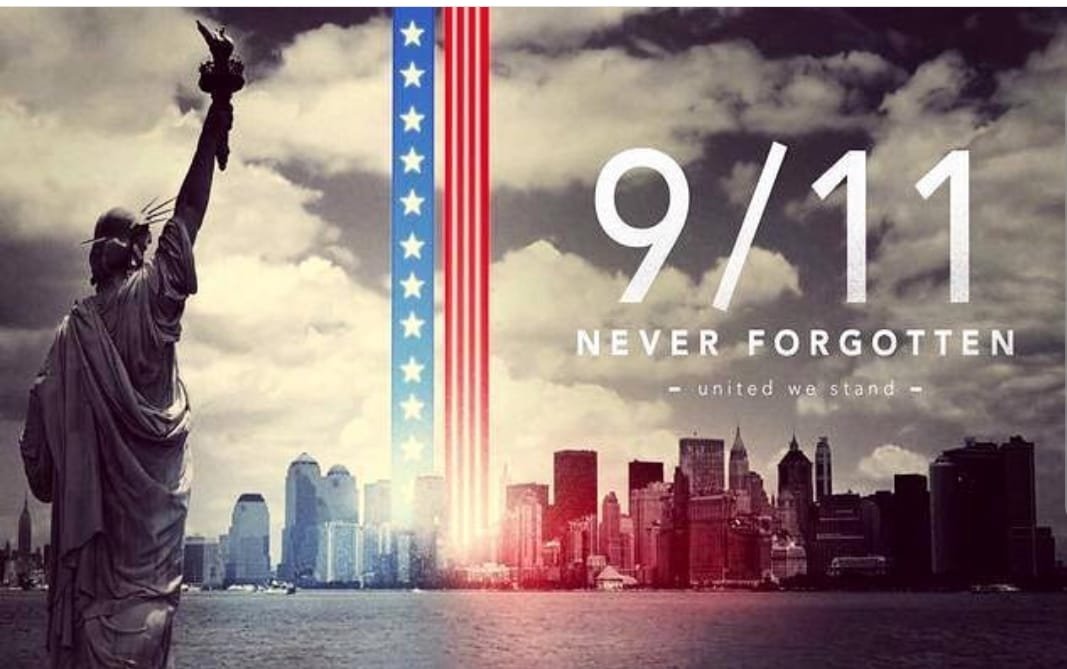
/It truly is up to us to Never Forget the heroes and victims of September 11th, 2001. But the sad reality is that while the attacks happened twenty-five years ago, September 11th is still taking lives. The NYPD lost 23 members that day. In the years since, hundreds more members of the Department have died from 9/11-related illnesses, including my former partner, Lieutenant Paul Murphy, while thousands more continue to battle cancers and other serious conditions.
Across the entire 9/11 community, the toll is even greater. Thousands of responders and survivors have died in the years since, while tens of thousands continue to live with illnesses associated with their exposure.
Even those of us who survived the attack did not simply walk away from it.
September 11, 2001
That Tuesday morning was Primary Election Day in New York City. I was an NYPD sergeant working a day tour, visiting polling locations.
For me, it began as just another workday. That changed quickly.
The first report we heard was that there had been an explosion at the World Trade Center. My first thought was remarkably mundane: This is going to create absolute havoc with traffic.
As we were pulling up to a polling location, another call came over. A plane had struck the North Tower.
My mind immediately went to a small commuter aircraft or perhaps a sightseeing helicopter. Both were common sights along the Hudson and East Rivers. At that point, the idea that a commercial airliner had deliberately been flown into the World Trade Center was simply beyond comprehension.
Then came the report of the second plane. We knew we were under attack.
My driver took us to the Special Operations Division, where for the first time I was able to see the television coverage. Looking at those images, it became painfully apparent that these were not small aircraft.
I had quit smoking about a week earlier.
I called my wife and told her that I was “quitting quitting.”
I knew a cigarette shop nearby and had my driver stop. I ran inside for a pack and discovered that, of all things, they were out of my brand.
The clerk and I just stared at each other.
I could have bought something else, but for whatever reason, I didn't. I walked back outside almost as if I were trying to process this strange little inconvenience in the middle of everything happening around us.
My driver asked if we were ready to go.
“No,” I told him. “They're out of my brand.”
So we went somewhere else.
I got my cigarettes, and we immediately headed toward Manhattan.
During the drive, I called my wife again and told her where we were going.
She panicked.
“You can't go in,” she told me. “You don't have your vest.”
In one of those strangely funny moments that somehow occur even on the darkest of days, I replied: “They're flying planes into buildings. I don't think my vest is going to help me.”
We had only been married for a couple of years. For her, I think that moment brought a sudden realization of what being married to a police officer could mean.
Because this is what we do.
We run toward the danger, not away from it.
Going In
The drive toward Manhattan was difficult. Cars had been abandoned in the roadway, forcing us to weave around them and drive along the shoulders.
At one point the view ahead opened up and I could see the Twin Towers.
Black smoke billowed from them against an otherwise crystal-clear blue September sky.
When we reached the Brooklyn-Battery Tunnel, there was a firetruck stopped near the toll plaza. As we were about to pass it, a firefighter jumped out and stopped us.
Before I could really process what was happening, a wall of smoke and debris came pouring out of the tunnel.
Then came civilians.
They were running out, covered from head to toe in gray ash.
For a moment, I thought the tunnel itself had been attacked.
My mind was still focused on one thing: get to the World Trade Center.
I directed my driver toward the Brooklyn Bridge instead.
By the time we got there, we encountered an enormous mass of people trying to get out of Manhattan. It quickly became obvious that we weren't going to drive much farther, so we took the first exit we could.
I remember looking at my driver and saying:
“I have no idea what's going to happen, but it's been an honor working with you.”
I suppose that was the moment when I finally resigned myself to the enormity of what we were heading into, as well as the danger.
We abandoned the car. And then the job changed.
The Never-Ending Wave
Instead of getting to the World Trade Center, we found ourselves helping evacuate civilians.
Much of what followed is a blur.
What I remember most clearly are the people. They just kept coming.
Wave after wave of humanity moved away from Lower Manhattan, looking to police officers, firefighters and anyone else in authority for direction. We treated the injured where we could and kept everyone moving away from the danger.
It seemed endless.
The evacuation of Lower Manhattan that day was extraordinary. Hundreds of thousands fled on foot, while an improvised armada of ferries, tugboats, Coast Guard vessels and private boats carried hundreds of thousands more across the surrounding waterways. Estimates put the number upwards of a million people.
For comparison, the legendary evacuation of Dunkirk during World War II rescued approximately 338,000 Allied troops over nine days.
We did it in nine hours.
Standing there in the middle of it, though, there were no statistics.
There were simply people.
And they didn't seem to end.
Where Was God?
In the years that followed, I was repeatedly asked a question: “Where was God on September 11th?”
As a survivor and as a Christian, I heard it often. Some people asked because they genuinely needed an answer. Others asked out of anger.
Eventually, I realized that I needed an answer of my own.
That search ultimately led me to write my book, Where Was God?
The deeper I went into that question, the more I came to believe something very simple: God was where He always is.
Later that night, when I finally reached Ground Zero, I stood looking at a place I had known intimately. Except now I barely recognized it.
The devastation was almost impossible to comprehend. The pile was indescribable from ground level. Fires burned throughout the debris. Smoke hung everywhere.
Looking at it, I could not understand how anyone could possibly have survived.
And yet, they did.
Approximately 17,000 people were inside the Twin Towers that morning. Nearly 87 percent escaped.
The buildings were only about one-third to one-half occupied when the attacks occurred. Had both towers contained their full populations of roughly 20,000 people each, investigators would later estimate that approximately 14,000 people might have died because there would not have been enough time to evacuate them all.
The towers stood 110 stories high—more than a quarter-mile into the sky.
Yet neither toppled sideways across Lower Manhattan.
One structural engineer would later estimate that had a tower fallen outward into the surrounding city, casualties might have reached 100,000.
None of that diminishes the almost unimaginable loss of 2,977 innocent lives that day, but it reminds us that amid an act designed to produce death on an almost incomprehensible scale, thousands upon thousands lived.
For hours afterward, we desperately hoped survivors would continue to be found beneath the rubble.
One more was.
The Angel in the Rubble
Her name was Genelle Guzman-McMillan.
Genelle was a Port Authority employee working on the 64th floor of the North Tower. She and several coworkers managed to descend more than fifty floors before the building collapsed around them.
She had made it to approximately the 13th floor. Then the world came down.
Genelle survived inside a tiny pocket beneath the mountain of concrete and steel. Badly injured and unable to free herself, she remained trapped for approximately 27 hours and she prayed.
Genelle has recounted that while she lay beneath the rubble, believing she might die there, she asked God to save her and promised that if He gave her another chance at life, she would change the way she lived.
Eventually she heard voices.
She cried out and worked at the debris with the one hand she could move.
Then, according to Genelle, a hand reached through the rubble and took hers.
A man reassured her.
His name, he told her, was Paul.
For Genelle, what happened beneath that rubble became something much more than a rescue. She came to believe that God had answered her prayer.
She ultimately described that experience in her memoir, Angel in the Rubble.
And at approximately midday on September 12th, after some 27 hours buried beneath the ruins of the North Tower, Genelle Guzman-McMillan became the last person pulled alive from the World Trade Center rubble.
And What About Me?
God didn't cause September 11th.
Men did.
But I believe God moved in the lives of those who rescued people that day.
I believe He moved in the lives of firefighters and police officers climbing stairwells while thousands of people were coming down.
I believe He moved through the paramedics, construction workers, ferry captains, tugboat crews and ordinary citizens who saw people in danger and chose to help them.
I believe He was present in the seemingly insignificant delays that caused some people to arrive late for work that morning.
And I believe God saved me with something as insignificant as a pack of cigarettes.
It wasn't until much later that I put the timing together. Had that first store had my brand of cigarettes, I would have been further along on my journey into Manhattan.
Based on our route and timing, I believe I would have been at the South Tower around the time it collapsed.
Of all the things that happened to me that day, that delay is one I have never forgotten.
A cigarette store didn't have my brand that day, but it gave me the next twenty-five years.
Twenty-Five Years Later
September 11th demonstrated the extraordinary things human beings are capable of doing to one another, but it also demonstrated the extraordinary things human beings are capable of doing for one another.
For me, that distinction matters.
The Bible begins with humanity being given a perfect world—and choosing to turn away from God. We have been living with the consequences of human choices ever since.
September 11th, like so many horrific events throughout human history, demonstrated the terrible depths to which mankind can descend when hatred consumes the human heart and faith itself becomes twisted into a justification for evil.
So perhaps, after twenty-five years, the question isn't simply: “Where was God?”
Perhaps the question we should be asking is: “Where are we?”
What have we done with the years we have been given?
What have we done for the people around us?
Have we remembered those who never received another morning after September 11th?
Have we remembered those who survived that day, only to lose their lives years later because of it?
Have we remembered the families who still carry those empty places at their tables?
And have we remembered how, on one of the darkest days in American history, ordinary people did extraordinary things for complete strangers?
Never Forget cannot simply be something we say once a year.
It has to mean something.
If you have never trusted in God, I would encourage you to reach out to Him. On this 25th anniversary, as we remember those we lost and those we continue to lose, I leave you with the words of John 3:16: “For God so loved the world that he gave his one and only Son, that whoever believes in him shall not perish but have eternal life.”
May we never forget those who were taken from us.
May we never forget those who ran toward the danger.
May we never forget those who are still suffering.
And may we never forget how precious—and how uncertain—the gift of another day truly is.
Thank you for taking the time to read my story.
May God bless you, and may God bless all those whose lives were forever changed on September 11th, 2001.