
When Snowballs Become a Warning: What Washington Square Park Says About the Collapse of Policing
/Snowballs.
That’s what they were throwing at NYPD officers in Washington Square Park.
Not bullets.
Not Molotov cocktails.
Snowballs.
And that’s exactly the problem.
Because it wasn’t about snow.
It was about defiance.
It was about contempt.
It was about the open mockery of authority in a city that once understood what happens when order erodes.
I wore the uniform in the 80s, the 90s, and into the mid-2000s. The confrontational nature between cops and criminals — or even wayward youth — has always existed. That’s nothing new. But there used to be a line.
When you were told to move, you moved.
If you didn’t, you were making a choice. And that choice had consequences. Sometimes that meant what we used to call an “attention getter” — a sharp reminder with a nightstick that the conversation was over.
The police were either respected or feared.
In a civilized society, that balance is not cruelty. It’s necessity.
And like all necessary things, it requires discipline on both sides.
The Long Neutering of Law Enforcement
This didn’t happen overnight.
For more than a decade, policing in America — and especially in New York — has been steadily weakened. Public confidence shifted. The narrative changed. Police were cast broadly as the problem.
To be clear: no one despises a bad cop more than a good cop. Bad officers make the job exponentially harder. They stain the badge for everyone.
But something strange happened along the way.
Accountability became one-sided.
Where is the outrage for the behavior in Washington Square Park? Where is the collective condemnation of youths pelting officers with projectiles and laughing while doing it?
When did open defiance become entertainment?
Fear of Consequences Is Not Tyranny
As a Gen X kid growing up in the 70s, the rules were simple: if you did something stupid and got caught, consequences followed. Not theoretical consequences. Real ones.
You learned quickly.
And most people behaved — not because they were saints — but because they understood the cost of crossing the line.
Here’s the uncomfortable truth: humans are not inherently virtuous. The majority behave because there are laws — and because there are consequences for breaking them.
Remove the consequences, and you remove the restraint.
That’s not ideology. That’s history.
One quick example occurred outside a ‘social club’ which was slang for an organized crime location. This one was for the ‘yutes’ and we stopped to issue a ticket for a car parked in a bus stop. That was when the owner came out and started fighting with us, and then the rest of the club joined in. It started out as a 2 V 20+, but a radio changes the equation (and the odds) rapidly in NYC. Thirty seconds later, the night was filled with sirens and the cavalry coming with nightsticks. We got lumped up, but we won. One week later, and every VTL (traffic) infraction being enforced outside of every social club in the precinct, the ‘old men’ cried Mea Culpa, apologized, and dealt with their own. Lesson learned and we never had another problem.
The Slippery Slope No One Takes Seriously
People see officers getting pelted with snowballs and they laugh.
They scroll.
They shrug.
“It’s just kids.”
“It’s just snow.”
But what they’re witnessing isn’t weather. It’s erosion.
When there is no fear of consequences — or no respect for the enforcer of those consequences — the slide is fast.
Children raised without boundaries become adults who assume impunity. And when the police are no longer the target of that contempt, it doesn’t disappear.
It shifts.
Toward store owners.
Toward neighborhoods.
Toward you.
The Pendulum Always Swings Back
Society is a pendulum.
When it swings too far in one direction — stripping authority, mocking enforcement, tolerating disorder — it does not stop in the middle.
It swings back.
Hard.
History shows us this over and over. Periods of permissiveness often give way to periods of overcorrection. And when that swing comes, it rarely looks gentle.
The real question is this:
Will there be enough officers left willing to stand in the breach when it happens?
The Thin Blue Line Isn’t a Slogan
It’s a reality.
Most people don’t think about crime until it knocks on their own door. They’ll watch protests, riots, disorder — and assume it’s someone else’s problem.
Until it isn’t.
There was an old saying when I was on the job: nothing changes a liberal’s view on crime faster than becoming a victim of one. It’s human nature. We rarely care deeply about disorder until it touches us personally.
But by the time it does, the culture that once discouraged it may already be gone.
Snowballs Today. What Tomorrow?
Mockery of authority is not harmless. It’s a signal.
It signals that deterrence is fading.
It signals that consequences are uncertain.
It signals that enforcement is restrained while defiance is emboldened.
You can call it overreaction.
Or you can call it early warning.
Because when the line between order and chaos weakens long enough, it doesn’t quietly stabilize itself. It fractures.
And when it fractures, people don’t ask whether the officer being hit deserved it.
They ask why no one came when they called.
And maybe that’s the part that troubles me most.
Because I already wrote this ending once.
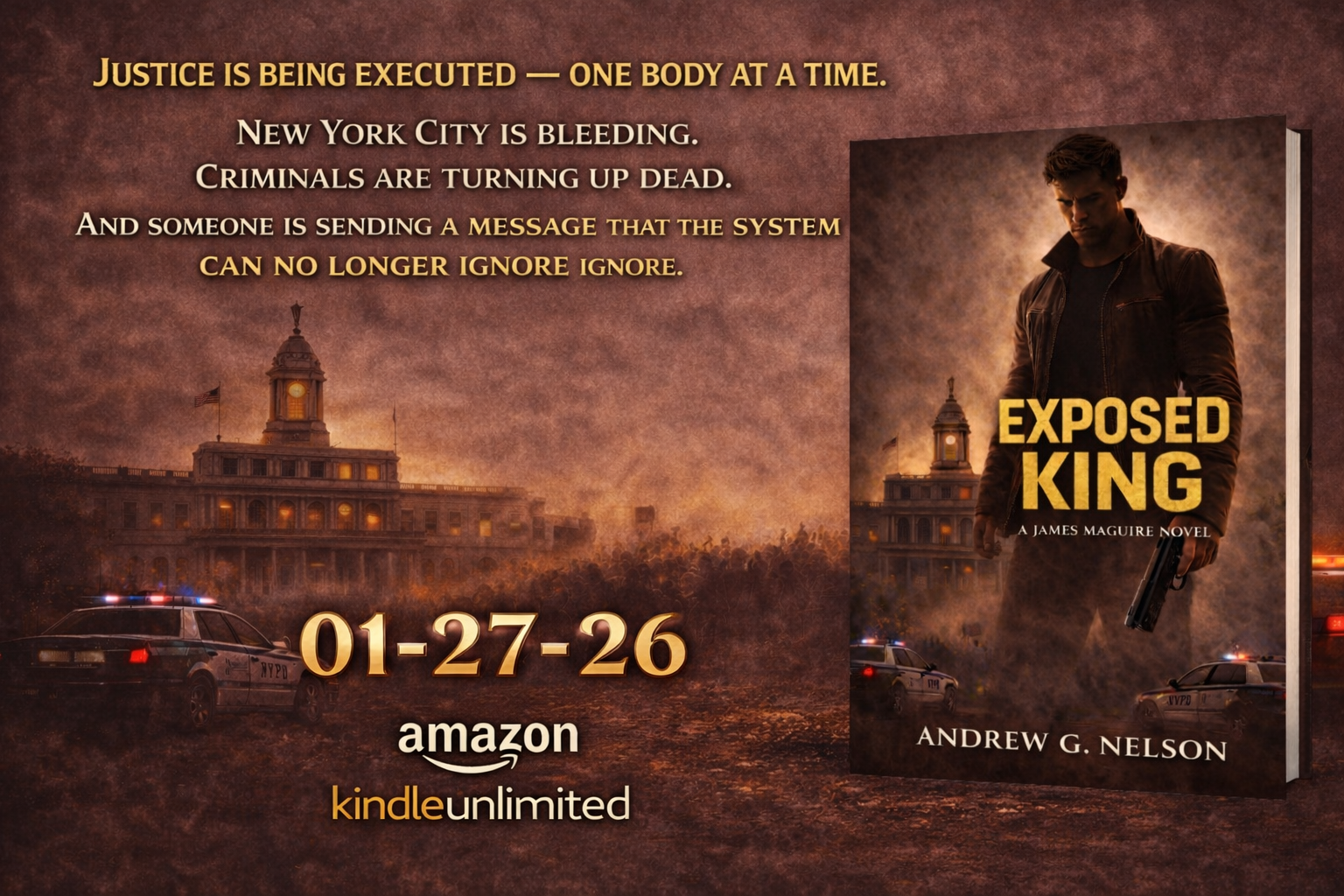
In my latest novel, Exposed King, the crisis eventually passes. The emergency fades. The outrage cools. And the people in power? They revert. The system resets. The lessons go unlearned.
The vigilantes were wrong in their methods — but their frustration wasn’t born in a vacuum. It was born from watching institutions hesitate.
From watching consequences soften.
From watching order become negotiable.
Washington Square Park isn’t about snowballs.
It’s about a society flirting with the idea that authority is optional and consequences are unfair.
In Exposed King, the most haunting realization wasn’t the chaos; it is what happens when good people are finally pushed too far.
We’re standing in that moment now.
And if we keep pretending snowballs are harmless — we may discover that the next thing thrown won’t be.