
Frank Reagan & James Maguire: NYPD Blue Bloods vs Crime Fiction
/I’m going to start this off with a confession that might surprise some people: I have never watched an episode of Blue Bloods.
That’s not a knock on the show. It’s actually self-preservation.
After 20 years as an NYPD officer, watching police dramas can feel less like entertainment and more like a critique session. I become that guy—the one sitting there pointing at the screen saying, “That’s not how it works,” or “There’s no way that would happen.” It takes the fun out of it for me and anyone unfortunate enough to be watching with me.
In fact, the closest I ever came to Blue Bloods for years was criticizing a photo of Tom Selleck in uniform, despite playing the Police Commissioner, which is a civilian position.
So no, I wasn’t exactly lining up to binge the show.
But then the internet did what the internet does.
At some point, Facebook decided I needed to start seeing Blue Bloods reels. I watched one. Then another. And suddenly, that’s all my feed became, which, to be fair, has been a lot more enjoyable than watching Mets highlight reels lately.
And that’s when something unexpected happened.
I started to notice a pattern.
Two Men, One Philosophy
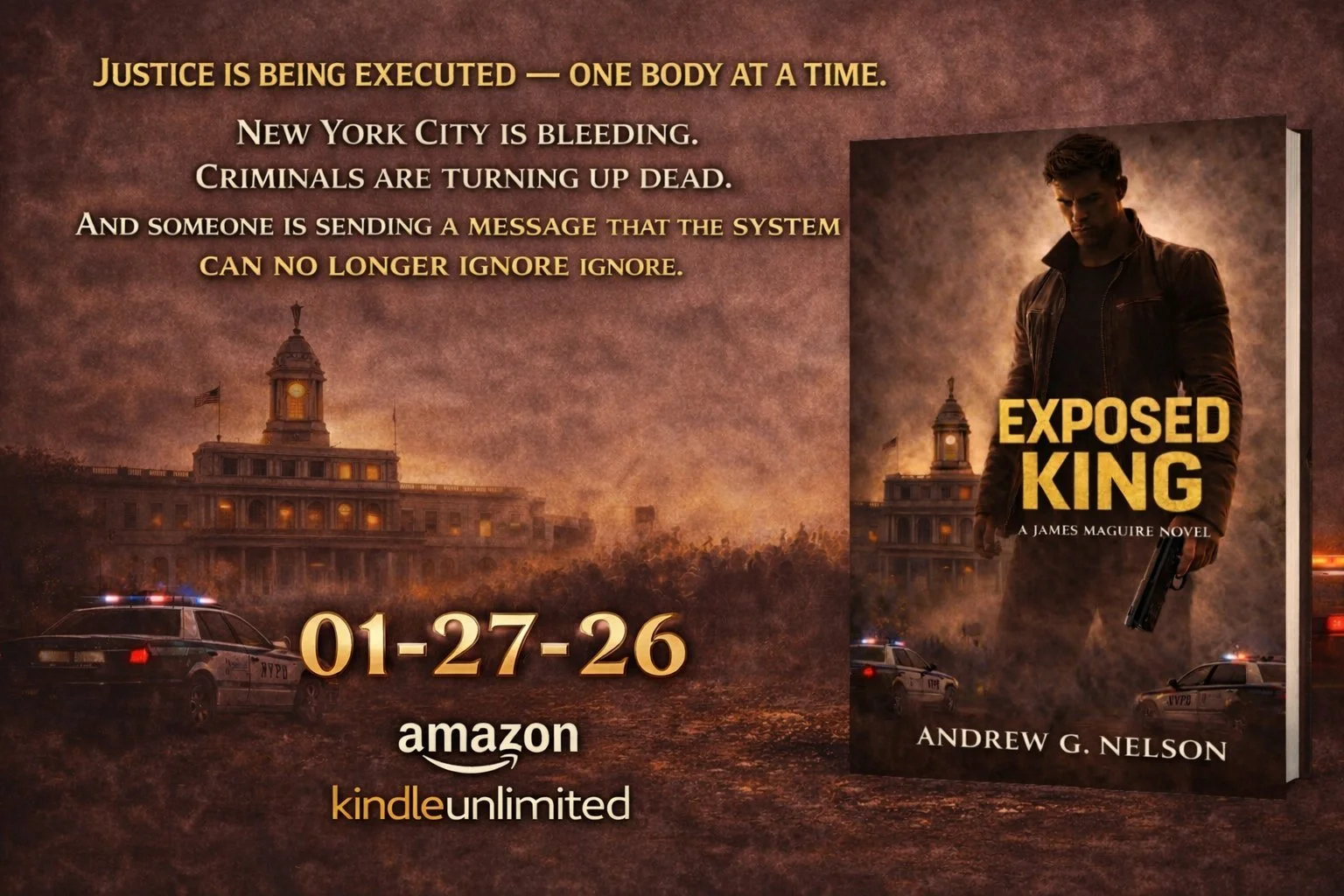
Even from short clips, it became clear that Frank Reagan and my own character, James Maguire, share a striking amount of DNA.
Both are straight shooters.
Both hold one of the most powerful positions in law enforcement, and yet, neither seems entirely comfortable with it. The rank is there, the authority is real, but there’s always a sense that they’d rather be doing the job than managing the politics around it.
And that’s where the tension lives.
Because neither man is built for politics.
They push back. They question. They resist when something doesn’t sit right. Not out of ego, but because they’ve spent their careers learning what justice actually looks like, not what it looks like on paper or in a press conference.
The Reality Behind the Badge
Here’s the part that resonates most with audiences, whether they realize it or not:
Both Maguire and Reagan were cops first.
They’ve seen things most people only read about. The ugliness. The randomness. The moments where there is no clean answer—only the least wrong one.
That experience changes you.
It strips away the illusion that everything is black and white. Because it isn’t.
It’s gray.
Always gray.
And yet, what makes these characters compelling is that they don’t abandon the idea of right and wrong, they just understand that sometimes you have to work within the gray to get there.
Why This Character Type Works
Here’s my take on why this archetype resonates so strongly:
People say they want clear lines: good versus bad, right versus wrong.
But deep down, they know that’s not how life works.
They understand that justice is complicated. That sometimes the system doesn’t function the way it should. That doing the right thing doesn’t always look clean or feel comfortable.
What they’re looking for—whether they realize it or not—is someone who can navigate those gray areas without losing their moral compass.
That’s where characters like Maguire and Reagan come in.
They’re not perfect. They’re not political animals. In many ways, they’re in roles they never would have chased, but once they’re there, they refuse to let the job change who they are.
They adapt just enough to survive the system… but not enough to be consumed by it.
The Reluctant Leader
At the end of the day, both James Maguire and Frank Reagan represent a type of leader we don’t see enough of—on screen or in real life.
The reluctant one.
The one who didn’t climb the ladder for power, but ended up at the top because they were the right person for the job.
The one who understands that leadership isn’t about control, it’s about responsibility.
And maybe that’s why these characters stick with us.
Because in a world full of noise, politics, and gray areas, there’s something reassuring about someone who can stand in the middle of it all and still say: “This is right. This is wrong. And I’m not backing down.”
If you’re a fan of grounded, character-driven crime stories—or if you’ve ever wondered what leadership really looks like behind the scenes—there’s a reason figures like these continue to resonate.
They remind us that even in the gray, integrity still matters.