When Fiction Bleeds Into Reality: A Cautionary Tale

There’s a moment every writer dreads—not writer’s block, not bad reviews—but the quiet realization that the story you’re telling no longer feels speculative.

It feels familiar.

As I prepare to release the latest James Maguire book, Exposed King, I’ve found myself increasingly unsettled by the daily news cycle. Headlines that once would have sounded exaggerated now feel routine. Language that once belonged in dystopian fiction is now spoken casually from podiums, press briefings, and social media feeds.

And that should concern all of us.

Writing a Story I Never Wanted to Be Relevant

Exposed King follows NYPD Police Commissioner James Maguire as he investigates a disturbing pattern: criminals turning up dead, seemingly targeted, seemingly judged, seemingly executed. The city is already fractured—politically, socially, morally—and instead of unifying in the face of fear, its leaders retreat into tribal lines, rhetoric, and blame.

Maguire isn’t just fighting a killer.
He’s fighting paralysis.
He’s fighting politics.
He’s fighting the slow erosion of trust between the public and the system meant to protect them.

I began outlining Exposed King in 2019—long before the social fabric felt this frayed, before institutions were openly questioned at every turn, and before division became a political currency. At the time, much of what I was writing felt speculative, even risky. I remember second-guessing certain plot points, worried that I might be “jumping the shark,” pushing the story too far beyond what readers would find believable. Now, as the book nears release, I find myself unsettled for an entirely different reason: those same elements no longer feel exaggerated. They feel plausible. Worse, they feel familiar—like stories that could comfortably lead the evening news rather than live between the covers of a novel.

That growing sense of recognition is also part of why Exposed King took longer to finish than I ever anticipated. As the world began to resemble the story I was trying to tell, I found myself slowing down—not because I had run out of ideas, but because the line between fiction and reality had blurred. The story demanded more care, more restraint, and a deeper understanding of the consequences it was pointing toward.

Exposed King was intended as a cautionary thriller—a “what if.” What if leaders spent more time posturing than protecting? What if laws were enforced selectively? What if criminals were elevated as symbols while ordinary civilians were reduced to statistics? What if accountability vanished, replaced by ideology?

I never expected to watch those questions unfold in real time.

The Dangerous Game of Anarcho-Tyranny

There’s a concept often discussed in political theory called anarcho-tyranny: the idea that institutions grow increasingly oppressive toward the law-abiding while becoming increasingly permissive toward the lawless.

You see it when:

  • Crime rises, but consequences vanish

  • Civilians are told to “understand” while victims are told to endure

  • Violence is condemned selectively, depending on who commits it

  • Entire groups of people are demonized for their beliefs, their votes, or their skin color

When leaders fan these flames—intentionally or not—they gamble with something they cannot control: human breaking points.

History shows us, again and again, that when good people feel abandoned, ignored, or sacrificed for political optics, something snaps. Not in everyone. Not at once. But enough to change the trajectory of a society.

That’s the danger zone.

When the System Loses Moral Authority

One of the central tensions in Exposed King is this:
What happens when the system loses the moral authority to govern?

Not legally.
Morally.

When people no longer believe justice is possible, they don’t stop believing in justice altogether—they start redefining it. And that’s when things turn dark.

This isn’t an endorsement of vigilantism. Quite the opposite. It’s a warning. A society that pushes its citizens into corners—where law feels optional for some and suffocating for others—creates the very monsters it later claims to fear.

And here’s the part that should keep politicians awake at night:

Once violence becomes normalized, once dehumanization becomes routine, once “enemy” replaces “neighbor,” the crosshairs don’t stay fixed on the margins forever.

They move.

A Personal Unease

As a writer, I’m supposed to imagine worst-case scenarios. I’m supposed to explore uncomfortable questions. But I never wanted to feel like I was chronicling the present.

There’s a deep discomfort in watching scenes I labored over—conflict, distrust, political theater—play out not on the page, but in real cities, with real victims, and irreversible consequences.

Stories are meant to provoke thought, not serve as blueprints.

A Caution, Not a Call

Exposed King is not a manifesto. It’s not an argument for one side or another. It’s a warning about trajectories—about what happens when leadership prioritizes ideology over stability, messaging over lives, and division over responsibility.

The path we’re on is a dangerous one.

If leaders continue to sacrifice cohesion for applause, morality for momentum, and people for power, they shouldn’t be shocked when the consequences arrive uninvited.

Because once society decides the rules no longer apply evenly… everyone becomes vulnerable.

Including those who thought they were untouchable.
September 11th, Charlie Kirk, and Exposed King

I am sitting here this morning feeling a sense of numbness as I deal with the normal emotions of September 11th coupled with the assassination of Charlie Kirk. I say ‘normal’ because as an NYPD first responder on that day I have grudgingly accepted that the emotions are part of who I am now. I stopped trying to make sense of it long ago, and now I just accept that there is an ebb and flow that I must ride out annually. I don’t fight it; I just let the memories come in and go out, because you cannot make ‘sense’ of what happened twenty-four years ago.

On September 11th, 2001, we came together as a country. At first we felt rage and anger about the terrorist attack. Then we felt the collective pain as we came to terms with the fact that we’d lost thousands of our fellow citizens; men, women and children who would never see another sunrise; people who woke up and died because of someone else’s hatred. Then there was a brief moment of solidarity: United We Stand, Never Forget, Remember the Heroes… but like most altruistic slogans, it had no depth.

Yesterday, September 10th, 2025, a 31-year-old husband and father of two small children was assassinated in Utah. His crime? Having a dissenting opinion.

Charlie Kirk was on a university campus, a world where dissenting opinions have traditionally been fostered and embraced, but yesterday we were told, in no uncertain terms, that this world no longer exists.

A man was murdered in cold-blood and many cheered at his demise.

A bullet became the ultimate form of censorship.

It reminded me of the line spoken by Tyrion Lannister in George R.R. Martin’s book: Clash of Kings – “When you tear out a man's tongue, you are not proving him a liar, you're only telling the world that you fear what he might say.”

This is America now. This is who we have become. Not United, but divided to the point that murder has become an acceptable course of action against those whom we disagree with.

I released my last James Maguire book, Glass Castle, in 2019. As most good authors, I had the working plot for the next book, Exposed King, in my head. I remember that I struggled a bit with it, because it had what I felt was a radical leap, or, to use the old Happy Days trope, I felt like I was ‘jumping the shark’ with this story-line, but I told myself that I could polish it and make it plausible. I’d moved on to the next Alex Taylor book, The Killing Game, as I compiled notes and ideas and fleshed-out the outline.

Then Covid-19 happened.

I thought it was my time to shine, to get the downtime I needed to write my little heart out.

I finished The Killing Game, I wrote Awakening, a genre bending police procedural meets vampires, got in another Cold Case novella, and even managed to write: Shadow Strike, a Maguire origin story, but Exposed King languished in a file on my computer.

I wrote some chapters, which were more like snippets or frustrated paragraphs, in fits and starts, struggling as I went, as if some unseen force was trying to block me. As a writer, I knew I had to walk away. Forcing it would never work. I kept asking myself why I was having so much of a problem.

It’s fiction. I’m a writer. This is what I do.

The truth is I fear that Exposed King won’t be fiction. The premise is less of a ‘who done it’ and more of a ‘what if.’

As I said earlier, the plot came to me during Glass Castle, pre-dating Covid, but also George Floyd and before the Defund the Police movement and all the other radical events since. With each passing day, I saw my fictional plot growing potentially more real, and it scared me.

America is changing, and not for the better.

For nearly a hundred years, Superman’s iconic motto was: “Truth, Justice, and the American Way,” and yet today we find ourselves facing an America where truth is subjective, justice is no longer impartial, and the American way is abhorrent to a large swath of society.

I know I have to finish Exposed King; I just hope it remains within the realm of fictional work and does not become a prescient warning.

A part of me wonders if George Orwell felt the same way when he published 1984.

May God have mercy on us.

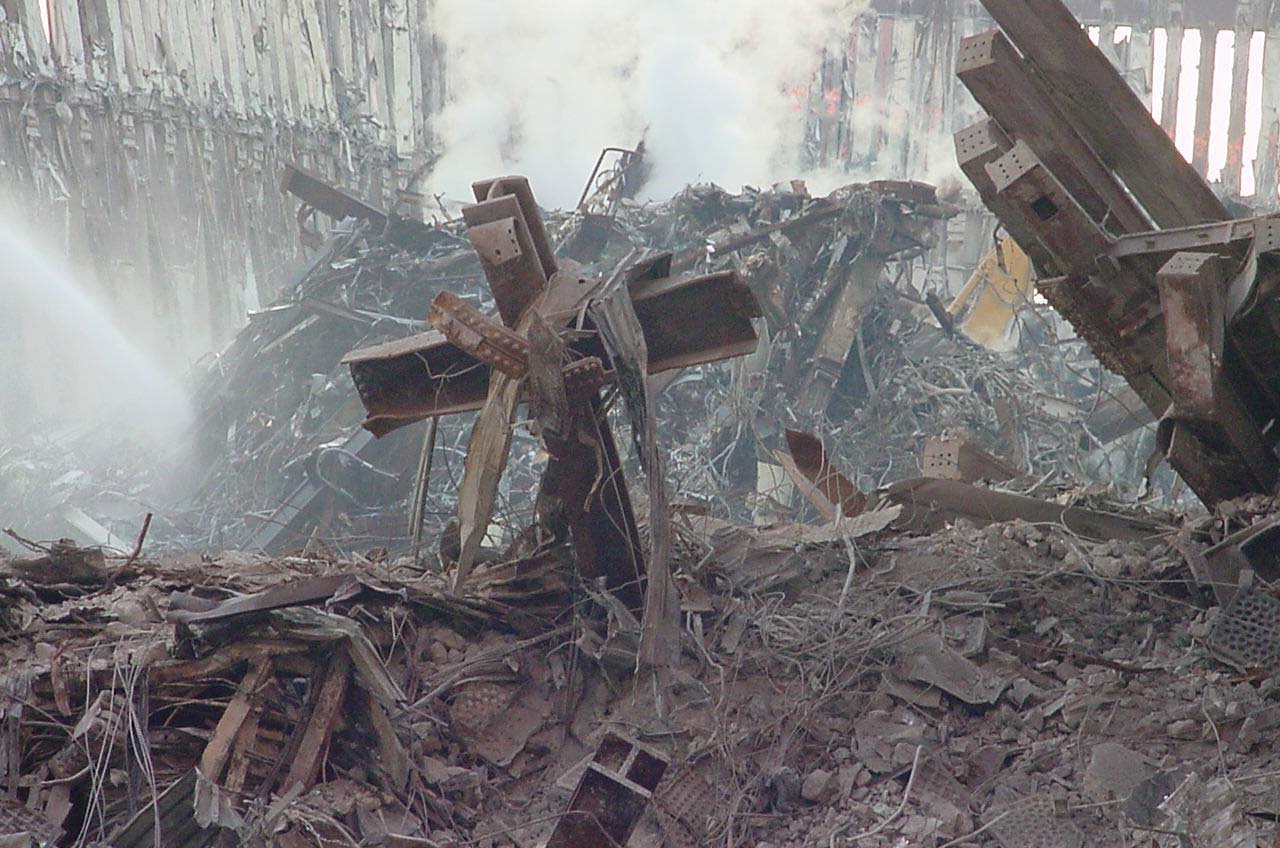
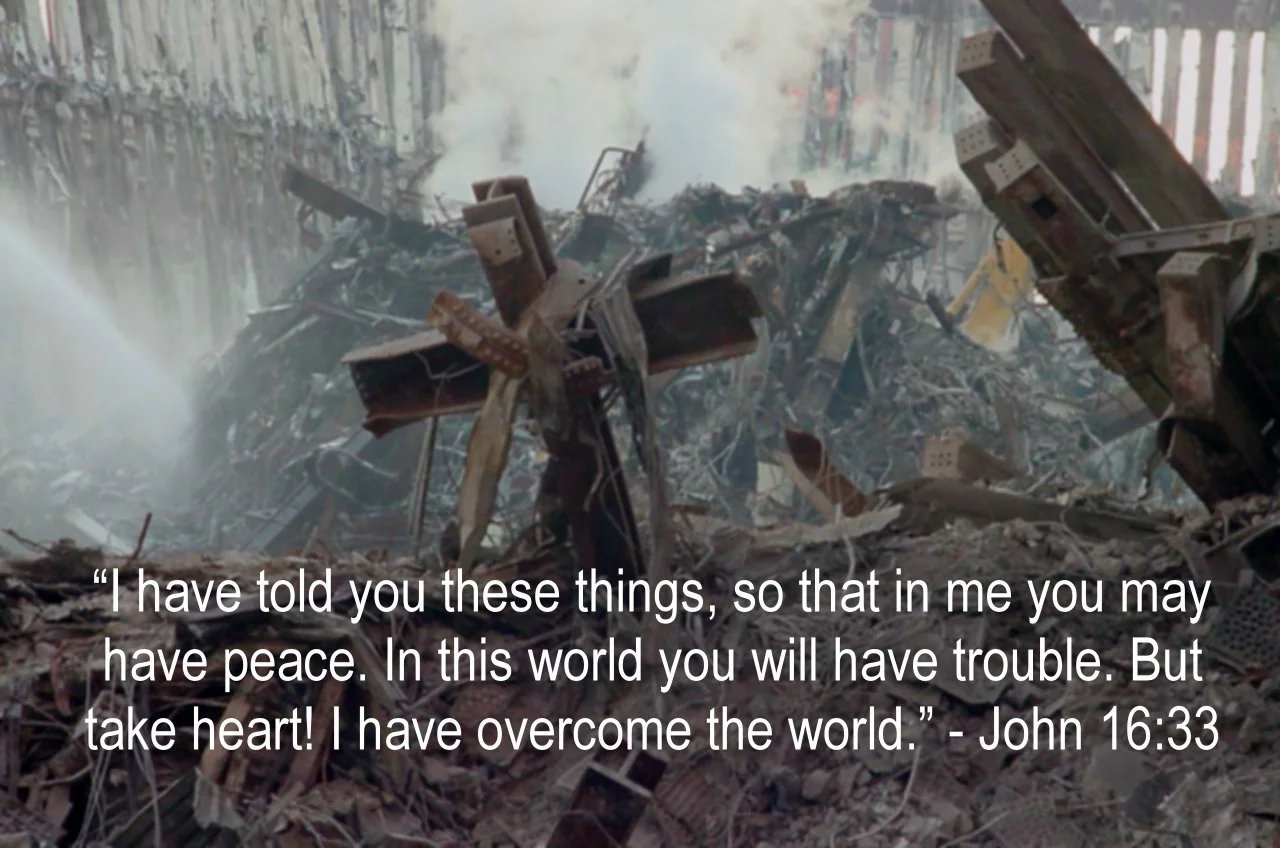
9/11 World Trade Center Cross taken by anne bybee

Remembering NYPD Police Officer Jonathan Diller

I am sitting here this morning feeling numb over the senseless murder of NYPD Police Officer Jonathan Diller.

P.O. Diller was killed by a career criminal, with over twenty prior arrests, including a gun charge, during a traffic stop in Far Rockaway, Queens.  I did not know Officer Diller, as I retired nearly twenty years ago, but I am proud to call him my brother. It is a family bond, not born through shared blood, but of one much stronger: the shared blood of those we have lost since the Department’s inception.

Growing up in Queens, my dream was to one day be a New York City Police Officer. That dream came to fruition in January 1985, when I was sworn-in to the Department. That dream became a nightmare exactly one year later when, as a rookie cop, I responded to the murder of Detective Anthony Venditti. Less than six months later, Police Officer Scott Gadell, a member of my squad in the 101 Precinct was murdered. I worked with Scott the night before, and nearly forty years later I can still recall the moments of that last night.

These two events drove home the harsh reality of being an NYPD cop. In the following years, the list of those making the ultimate sacrifice would grow longer and funerals became a common occurrence. Each one a reminder to those of us attending of the dangers we faced daily and a testament to the Department motto: Fidelis Ad Mortem, Faithful Unto Death.

While Officer Diller’s sacrifice will be solemnly recognized by his family, both blood and blue, it will be used as a platform for some of the most vile and reprehensible people I know: politicians.

Already, social media is rife with commentary from members of the New York City political scene, thumping their chest and decrying this senseless act. Yet these very same people are the ones directly responsible for the environment that caused it.

The truth is, being a cop is a thankless job. You are the enforcement arm of the state, and your presence never makes anyone feel better. We have the power to arrest and take away your rights. Most times we get it right, sometimes we don’t. Despite the training, despite the overwhelming desire to do good, we are only humans, just like everyone else, but we are expected to be better and we should be. It is however a requirement for any civilized society. We are the ones who willingly sacrifice our lives to protect the innocent.

Over the last decade plus, I have watched with dismay this growing trend to vilify the police at almost every turn and I have written about it before: STOP BLAMING THE COPS. Tragedies, exploited for cause, used to disparage the men and women of law enforcement. I get the politicians; they’ve become so dishonest that we don’t even realize the true extent that they lie for political gain. What bothers me is the average citizen who believes them. Perhaps it is a lack of civics in schools now, but it seems to me that most people don’t understand how our system of government operates.

Blaming the police for enforcing the law highlights the ignorance of people. We are the enforcement arm, but we are not the legislative arm. We take an oath and our duty is to enforce the law. The police do not create these laws, the politicians do. They are the same folks who stand in front of the cameras (or get on social media) and attack the police when an arrest goes bad, but neglect to mention that they are the ones who made the laws they expect the police to enforce.  It’s a great job, because the average citizen buys into these nonsensical claims they make and keep re-electing them. Explain to me, like I’m three, how it makes any sense to you that politicians pass laws for the police to enforce, but at the same time condemn them for enforcing them? You’re damned if you do your job and you’re damned if you don’t.

I keep hoping that this will be the last time I have to express my outrage about another senseless murder of a NYC Cop, but I know it won’t be. It wasn’t the last time when I wrote about the deaths of Police Officers Jason Rivera and Wilbert Mora. Nor was it the last when I wrote about the death of Police Officer Miosotis Familia, or Police Officer Brian Moore, or Police Officers Rafael Ramos and Wenjian Liu.  

Having been a cop back in the 80s, when we were both short staffed and dealing with the explosion of drugs, I thought I’d seen it all, but as I look back, I realize how good we had it. Yes, the streets were dangerous, but the threat was always in front of us. We never really had to worry about being stabbed in the back by the politicians and, for the most part, the citizens supported us. I could not imagine trying to pursue my childhood dream of being a cop today.

The NYPD will soon bury our lost brother, and he will be posthumously awarded the Medal of Honor and promoted to the rank of Detective. We will grieve his loss, alongside his family, but then the job will do what it has always done: Go back to work. Whether you like them or not, you need to remember that the men and women of the NYPD are the last line of defense; the brave souls who stand in the breach, against the violence and anarchy that lies in wait.

It would behoove the citizens of this once great city to wake up and decide who you are going to support. Those who work tirelessly to protect you or the politicians and district attorneys who have acted recklessly, who have pushed for soft on crime measures, and then lie and blame the police when those steps prove ineffective?

No one would be shocked if a child, who grew up watching one of their parents mentally and physically abuse the other, did the same thing when they grew up. Yet somehow we act shocked when our elected representatives sow the seeds of discontent, the fires of which are fanned by the media, that lead to these types of attacks being committed against on our police.

You elect them folks and they are your responsibility. If you no longer feel safe, if you are worried about becoming a victim every time you leave your home, then maybe it’s time to find new leadership. It took decades of NYC sinking into a cesspool of crime and poor quality of life conditions in order to elect Mayor Rudy Giuliani. It took much less time to piss it all away again. It’s up to you to change the course that the City is heading.

Don’t let Officer Diller’s death be in vain. Remember him when you head to the ballot box on election day; remember the wife and young child he left behind serving this once great City. Change begins when the good people of New York City stand up to the political cowards and say, ‘Enough.’

REMEMBERING SEPTEMBER 10TH, 2001

“Where were you on September 11th, 2001?”

It’s a question I have heard asked countless times over the last two plus decades. Everyone recalls where they were on that fateful day when they heard the news about the terrorist attacks in NYC, Shanksville, PA and the Pentagon. I’m no different, and I wrote about my story in my book: Where Was God? An NYPD first responder’s search for answers following the terror attack of September 11th 2001.

But for many of us, the memories of 9/11 don’t begin on that day. There is an emotional lead up that culminates in 9/10; the last day before our world was forever and irrevocably changed. I’m sure if I had the chance to speak with a veteran who was at Pearl Harbor on December 6th, 1941, they would share the same story. Remembering the last time that things were ever ‘normal.’

I remember September 10th.

I spent the evening watching Monday Night Football, sitting in bed feeling frustrated, because I had to get up early the next morning to cover the NYC primary election. I was glued to the game, watching my beloved NY Giants eventually lose to the Denver Broncos.  

That’s my last memory of normal.

At that time I had been a cop for over 15 years. I thought I had seen just about everything, but a few hours after waking up, I would learn just how wrong I was.

For the 23 members of the service we lost on 9/11, they never enjoyed another normal day. Twenty-Two years later, many of us have been forced to embrace a new normal, as we struggle with health issues due to exposure of toxins at Ground Zero. The scourge of cancer almost loses its sting when you realize that it is most likely not a question of if, but when.

You reflect a lot on the fact that 9/11 wasn’t a singular terrorist attack, but a generational one that continues to claim lives two decades later. It’s difficult to embrace normal when you get constant notifications alerting you that we’ve lost another first responder to a 9/11 illness.   

Tomorrow politicians and pundits will dust off the tired old mantra: Never Forget, but the reality is we are forgotten; only remembered one day a year and then put back into the closest until the next anniversary. The majority of them have never had to struggle with having a normal day. The constant political fight to fund the 9/11 Health Program proves just how quickly they forget and move on.

Today I reflect on what life was like before that day and tomorrow I will mourn those we lost; killed in the initial attack or its lingering aftermath. Tomorrow will be about ‘remembering the heroes,’ but knowing that the door will close again on September 12th for another year.

WTC Cross Photo courtesy of Anne Bybee-Williams © 2001

Mourning the death of NYPD Police Officer Wilbert Mora

On January 21st, 2022, NYPD Police Officer Wilbert Mora was shot in the line of duty. His partner, Jason Rivera, was also shot and died of his wounds that night. Officer Mora was taken to the hospital, but I am saddened to report that he succumbed to his wounds on January 25th.

The loss of any officer’s life is tragic, but the death of two officers is a brutal reminder of just how difficult being a cop is. I didn’t know them personally, but they were my brother’s none-the-less. We forged our bond when they took their oath of office and joined the greatest police department in the world. They became part of a select fraternity of men and women who have become NY’s Finest.

Officer Rivera and Mora’s NYPD careers were cut short, but their names will live on forever. They embody the Department Motto: Fidelis Ad Mortem - Faithful Unto Death. This will come as little solace for their families, but within the NYPD there is no greater honor and we do not forget our fallen.

Reflecting on their deaths, I cannot help but think about the unfortunate history the NYPD has. As the Nation’s largest municipal police department, line of duty deaths are a grim reality. And while the loss of one officer is heartbreaking, the NYPD has lost a number of partners over the years, including:

Officers Victor Cooper and Clarence Clark (1938)

Officers Peter Knudson and Francis O’Hara (1946)

Detectives Luke Fallon and John Finnegan (1962)

Detectives James Donegan and Salvatore Potenza (1964)

Officers George Bishop and Plato Arvanitis (1969)

Officers Patrick Harrington and Joseph Mariconda (1970)

Officers Joseph Piagentini and Waverly Jones (1971)

Officers Gregory Foster and Rocco Laurie (1972)

Sergeant Frederick Reddy and Officer Andrew Glover (1975)

Officers Christie Masone and Norman Cerullo (1978)

Officers James Rowley and Charles Trojahn (1983)

Auxiliary Sergeants Larry Cohen and Noel Faide (1989)

Detectives Keith Williams and Richard J. Guerzon (1989)

Detectives Rodney Andrews and James Nemorin (2003)

Detectives Patrick Rafferty and Robert Parker (2004)

Auxiliary Officers Eugene Marshalik and Nicholas Pekearo (2007)

Officers Rafael Ramos and Wenjian Liu (2014)

To the family of Officer Mora, there are no words that I can give you that will take away the pain. Just know that you do not grieve alone. The tens of thousands of active and retired members of the greatest police department in the world mourn with you and Jason’s family and their sacrifice will never be forgotten.

Fidelis Ad Mortem